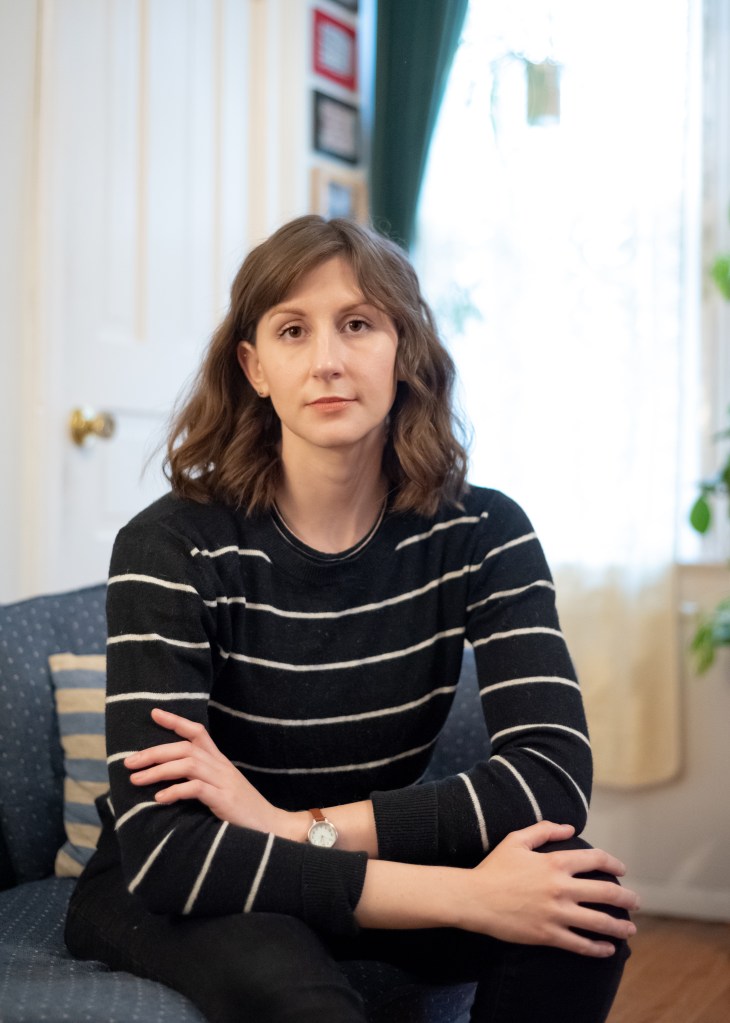
I am a therapist with a license in clinical social work. I earned my Masters of Social Work from the University of Michigan in 2022, completing a year-long internship in counseling at the Women’s Center of Southeastern Michigan during this time. My background prior to this is in emergency nursing, peer-support, harm reduction, and community education.
My approach to therapy is collaborative, non-pathologizing, and grounded in reverence of human diversity and our capacities to survive, grow, and change. My work is informed by research on human development, neurobiology, trauma, and attachment, as well as by peer-support models and harm reduction principles. I keep in mind systems (like laws) and environment (like families and communities) as I learn about my clients, the hardships they have faced, and the strategies they have developed to survive. I see therapy as a space where we can become more intentional about how we show up in the world and in our relationships and become more connected to our values. I understand clients as the experts on themselves and see my role as a companion, mirror, and sometimes guide.
I have experience working with clients from early adulthood to middle age on issues such as anxiety, relationship problems, trauma, divorce, and chronic illness. I am particularly drawn to working with adults on issues of developmental trauma, relationship problems, and emotion regulation and working with couples on secure relating.
I come to this work after over a decade of involvement in peer-support, harm reduction, popular education initiatives, mad pride movements, community organizing, and other grass roots social justice work. I have come to believe that attending to our own relational wounds and habits is an essential part of social change; as we work to create changes at policy and institutional levels, we must also attend to the intra- and inter-personal chaos we’ve taken on from the world around us via upbringing, socialization, and surviving in a world that encourages competition, violence, numbness, disconnection, and disengagement. A formal diagnostic framework is not central to how I understand clients and approach therapy, but rather a means to accessibility of care via insurance utilization. I align more with non-pathologizing approaches that see the sense, strength, and creativity in our adaptations, while also considering what those adaptations are costing us now.
In my spare time I like to hike and camp, do crossword puzzles, cook, and read sci-fi or psychological thriller novels.
 Katy Clark, LMSW